Discover the behavioral science and cognitive psychology principles that make flyer advertising one of the most effective local marketing channels. From the mere exposure effect to color psychology.
A comprehensive guide to the psychology and science behind effective flyer advertising
The psychology behind flyer advertising encompasses the behavioral science principles that explain why physical, tangible marketing materials influence purchasing decisions differently than digital content. Key psychological mechanisms include the mere exposure effect, the endowment effect, tactile memory engagement, and attention capture through physical presence. Understanding these principles helps businesses design door hangers and flyers that drive stronger responses.
The human brain processes physical objects differently than digital content. When someone holds a flyer or removes a door hanger from their door handle, multiple sensory pathways activate simultaneously — touch, sight, and spatial awareness all engage at once. This multi-sensory processing creates stronger memory traces than visual-only digital ads.
Research in neuroscience and behavioral marketing consistently shows that tangible marketing materials are processed more deeply by the brain and are more likely to be remembered than screen-based advertising. This is one reason why direct-to-door marketing continues to deliver strong results even in an increasingly digital world.
The mere exposure effect is a well-documented psychological principle: people develop a preference for things they encounter repeatedly. Every time a resident sees your brand name on their door, familiarity grows. That familiarity gradually converts into trust, and trust converts into choosing your business when the need arises.
This is why multi-wave flyer distribution campaigns outperform single drops. When Direct to Door Marketing delivers your materials to the same neighborhoods across multiple rounds, each delivery reinforces brand recognition and moves residents closer to taking action. The effect is cumulative and measurable.
Ready to Launch Your Campaign? Get a Free Quote in Under 5 Minutes.
Get Your Free QuoteOr call (866) 643-4037 — marketing specialists standing by
The endowment effect describes the tendency for people to value something more once they physically possess it. When a homeowner picks up a door hanger, they psychologically take ownership of that piece of marketing. It becomes “theirs” in a way that a banner ad never does. This sense of ownership makes people more likely to read the content, consider the offer, and keep the piece for future reference.
Direct to Door Marketing prints all materials on premium 100lb gloss cover paper specifically because heavier, higher-quality stock feels more valuable in the hand. A flimsy flyer gets tossed immediately. A substantial, well-printed piece gets a second look.
Color choices on door hangers and flyers directly influence how the message is received:
The most effective door hanger designs use high-contrast color combinations — a bold primary color against a contrasting background — to ensure the message is visible and scannable within seconds.
Color is not decoration — it is a decision-making tool. Decades of research in consumer psychology and visual neuroscience have established that color influences perception, emotion, and behavior in ways that are both immediate and subconscious. For flyer advertising, where you have fewer than three seconds to capture attention, color is the single most powerful weapon in your design arsenal.
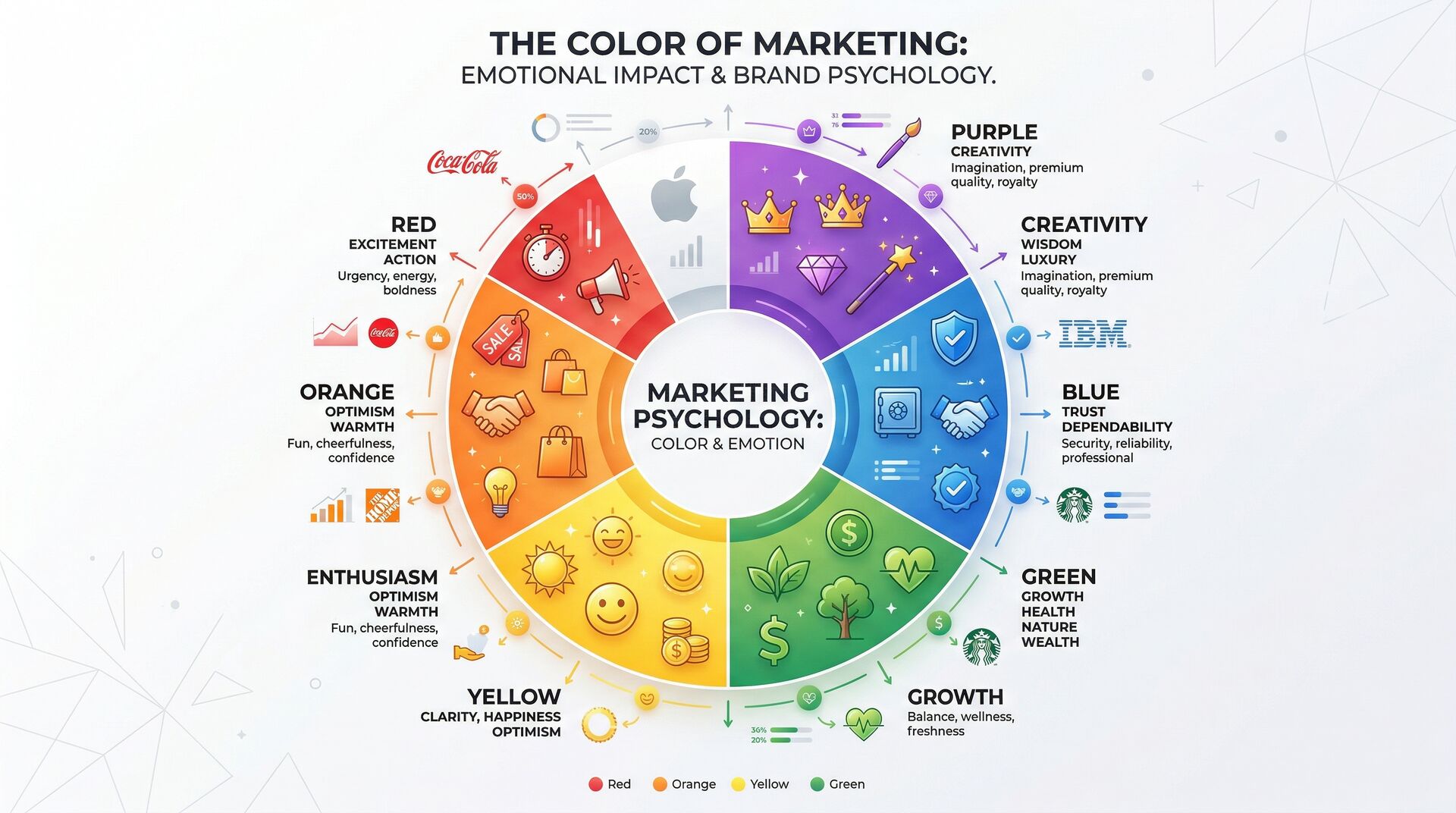
The Institute for Color Research found that people make a subconscious judgment about a product within 90 seconds of initial viewing — and up to 90% of that assessment is based on color alone. In flyer advertising, this means your color palette is communicating your brand’s personality, credibility, and value proposition before the reader processes a single word of text.
Color processing occurs in the ventral visual pathway of the brain, a region responsible for object recognition and emotional response. When a homeowner picks up a door hanger with a bold red call-to-action panel, their sympathetic nervous system activates — heart rate increases slightly, attention sharpens, and the brain flags the content as important. This is not a conscious choice. It is a neurological response hardwired by evolution, where red signaled both danger and ripe fruit — both demanding immediate attention.
Red activates the amygdala and increases arousal. It is the strongest color for calls to action because it triggers urgency and signals importance. Studies in retail psychology show red backgrounds increase willingness to act quickly. On flyers, use red for phone numbers, discount amounts, and CTA buttons to drive immediate response.
Blue activates the parasympathetic nervous system, producing feelings of calm and security. It is the most universally preferred color across demographics and cultures. Service businesses — HVAC, plumbing, legal, financial — benefit most from blue-dominant designs because they need to communicate reliability and professionalism before the customer is willing to call.
Green is associated with growth, savings, and environmental responsibility. Landscaping companies, eco-friendly brands, and financial service providers leverage green to communicate value and positive outcomes. In A/B testing of flyer designs, green “Save” badges consistently outperform gray or black versions of the same offer.
Color choice matters, but contrast may matter even more. A flyer with a red headline on a white background captures attention faster than a red headline on a pink background. The visual cortex is wired to detect differences, not similarities. High-contrast designs — dark text on light backgrounds for readability, bright accent colors for CTAs against neutral panels — consistently outperform low-contrast alternatives in response rate testing.
This is why Direct to Door Marketing advises against trendy monochromatic or pastel-heavy designs for performance-driven campaigns. Aesthetics matter, but legibility and visual hierarchy must come first. A beautiful flyer that nobody reads is a waste of marketing budget. A bold, high-contrast flyer that gets read and acted upon is an investment that pays for itself.
Color perception is not universal. Cultural background, age, and gender all influence color preference and interpretation. In Hispanic communities, warm colors like red, orange, and gold carry positive associations with celebration and vitality. In upscale suburban markets, navy, white, and gold project luxury and exclusivity. For healthcare marketing, clean blues and whites communicate sterility and professionalism.
Direct to Door Marketing’s nationwide network of 32,267+ distributors serves every demographic in the country. The design team tailors color palettes to the specific neighborhoods being targeted, ensuring the flyer resonates with the community it reaches — not just the business owner who ordered it.
In an era of infinite digital scroll, the physical world has become marketing’s most powerful differentiator. Neuroscience research published in the Journal of Consumer Psychology demonstrates that tactile interaction with marketing materials activates brain regions that screen-based content simply cannot reach — and the implications for flyer advertising are profound.
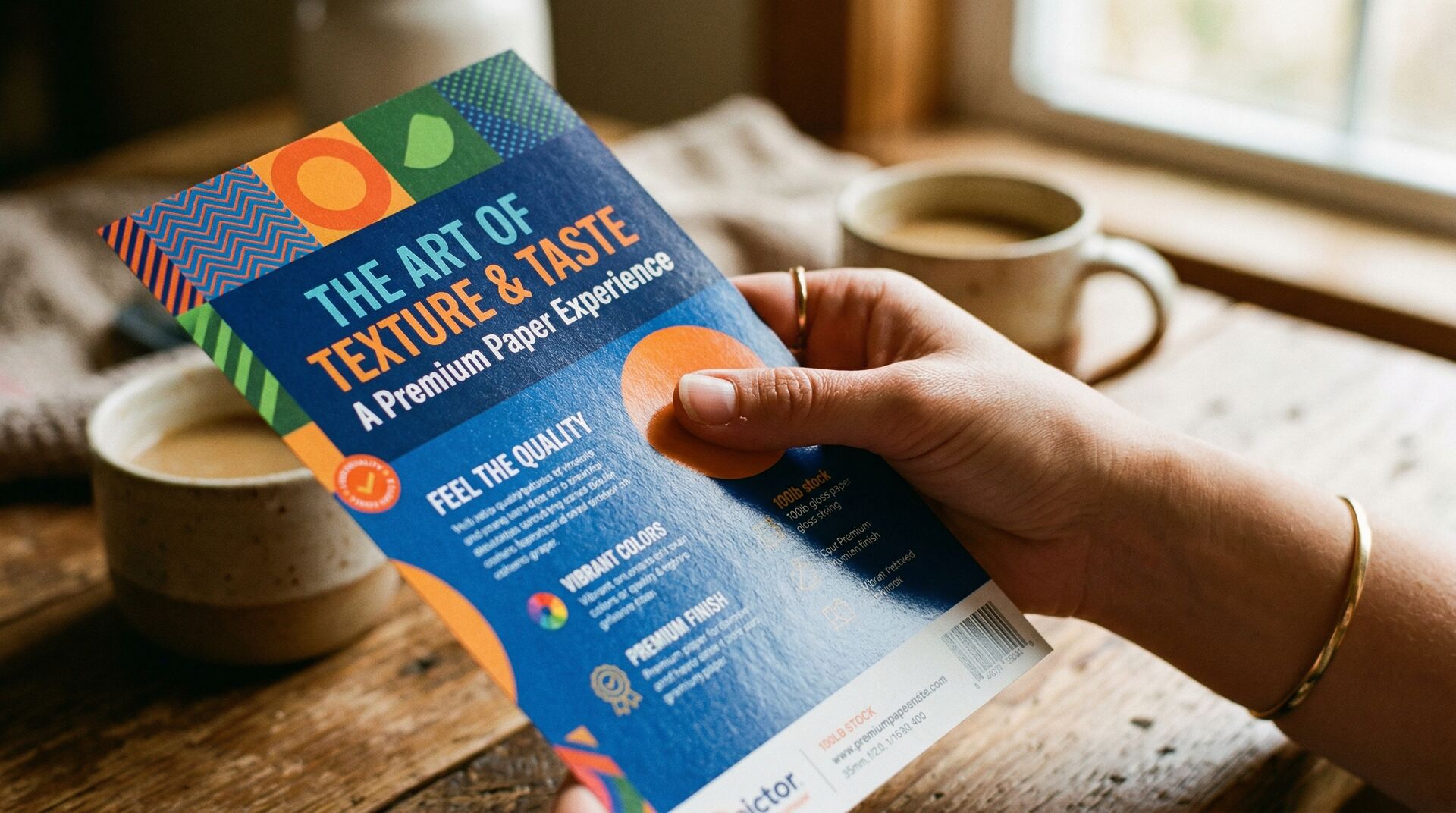
When a homeowner picks up a door hanger from their front door, the somatosensory cortex — the brain region responsible for processing touch — activates alongside the visual cortex. This dual activation creates what neuroscientists call a “multi-modal memory trace,” a memory that is encoded through multiple sensory channels simultaneously. Multi-modal memories are significantly more durable and more easily recalled than single-channel memories.
A landmark study by Millward Brown, using fMRI brain imaging, found that physical marketing materials generated stronger activity in the brain’s medial prefrontal cortex — the region associated with emotional processing and brand value assessment. The researchers concluded that physical media leaves a “deeper footprint” in the brain than digital alternatives, making it more likely to influence future purchasing decisions.
The weight and texture of a flyer are not merely aesthetic choices — they are psychological signals. Research in haptic psychology shows that heavier objects are perceived as more important, more valuable, and more credible. When a recipient holds a door hanger printed on Direct to Door Marketing’s standard 100lb gloss cover paper, the brain registers the weight as a signal of quality and investment. A flimsy, lightweight flyer printed on copy paper sends the opposite signal: cheap, disposable, not worth reading.
Research in tactile marketing shows that recipients spend significantly more time engaging with physical marketing materials compared to equivalent digital content. The physical act of holding, turning over, and reading a door hanger extends exposure time — and exposure time correlates directly with recall and response.
Behavioral economists have demonstrated through hundreds of experiments that people assign higher value to objects they physically possess. In the context of flyer marketing, this endowment effect means that a door hanger in someone’s hand is worth more — psychologically — than the same offer on their phone screen. The moment of physical contact transforms the flyer from “an advertisement” into “my coupon” or “my information.”
This is why well-designed door hangers with coupons or discount codes have such remarkably long shelf lives. Homeowners will stick them on the refrigerator, place them on the kitchen counter, or tuck them into a drawer — behaviors that would be unthinkable with a digital ad. Each subsequent encounter with the piece reinforces the brand message through the mere exposure effect, compounding the campaign’s impact over weeks and sometimes months.
The average American encounters between 6,000 and 10,000 digital advertisements per day. This relentless volume has produced a neurological adaptation: the brain has learned to filter out digital commercial content as background noise. Banner blindness, scroll fatigue, and ad blocker adoption are all symptoms of this cognitive overload.
Physical marketing cuts through this noise precisely because it is different. A door hanger on a door handle is unexpected, tangible, and impossible to ignore. It arrives in a context — the front door of the home — that carries strong associations with safety, ownership, and personal space. The message benefits from these positive contextual associations, a psychological phenomenon known as evaluative conditioning.
Direct to Door Marketing’s AI Management Platform and Proof of Delivery photo verification system ensures that every piece reaches its intended door. The tactile advantage only works if the flyer actually arrives in the homeowner’s hand — and with 32,267+ verified distributors covering 99% of U.S. zip codes, delivery accuracy is not left to chance.
Apply These Psychology Principles to Your Next Campaign
Get Your Free QuoteOr call (866) 643-4037 — campaign specialists standing by
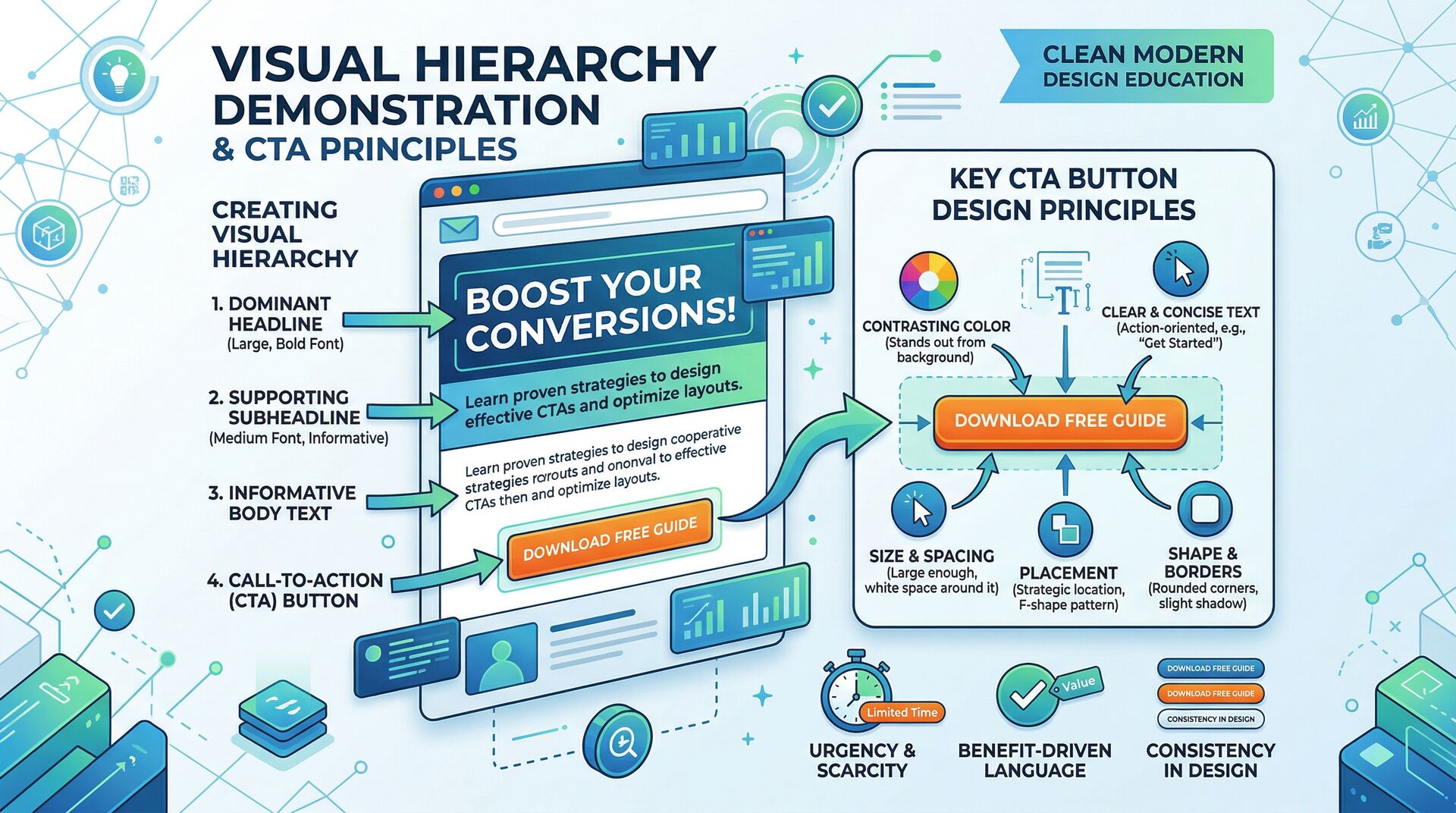
The call to action is the fulcrum of every flyer campaign. It is the moment where psychology converts to behavior — where a reader transitions from “I see this” to “I’m going to call.” Understanding the cognitive mechanics behind effective CTAs allows businesses to dramatically improve the conversion power of every door hanger and flyer they distribute.
Nobel Prize-winning research by Daniel Kahneman and Amos Tversky demonstrated that people feel the pain of losing something approximately twice as strongly as the pleasure of gaining something equivalent. In CTA psychology, this means “Don’t miss out on $50 savings” is substantially more motivating than “Save $50 today.” The first frame triggers loss aversion — the fear of missing a benefit. The second merely offers a gain.
Effective flyer CTAs leverage loss aversion through deadline language (“Offer expires April 30th”), limited quantity framing (“Only 25 appointments available this month”), and exclusivity signals (“Exclusive offer for [Neighborhood Name] residents”). Each of these frames the CTA as something the reader could lose rather than something they could gain, tapping into the brain’s strongest motivational circuitry.
Vague calls to action produce vague results. “Contact us” is one of the weakest CTAs in marketing because it fails to tell the reader what will happen when they act. Specific CTAs — “Call (866) 643-4037 for your free 15-minute roof inspection” — outperform generic ones because they reduce uncertainty. The brain is risk-averse by default. When a CTA clearly explains the next step and its outcome, it lowers the perceived risk of taking action.
Eye-tracking research shows that readers scan a door hanger in a Z-pattern: top-left to top-right, then diagonally to bottom-left, and finally to bottom-right. The optimal CTA placement is the terminal point of this pattern — the bottom-right quadrant — where the eye naturally comes to rest. However, the most effective door hangers include the CTA in two locations: the primary CTA in the bottom-right and a secondary CTA reinforcement at the top of the back side.
CTA sizing also matters. Fitts’s Law — a principle in human-computer interaction that applies equally to print design — states that larger targets are faster and easier to acquire. On a door hanger, this means the phone number and QR code should be large enough to read at arm’s length without squinting. Direct to Door Marketing’s design standards require a minimum 18-point font for phone numbers and a minimum 0.75-inch QR code, ensuring the CTA is accessible to all demographics, including older homeowners who may have reduced near-vision acuity.
One of the most effective CTA strategies combines the call to action with social proof. “Join 10,000 happy customers — call today” is stronger than “Call today” because it embeds evidence of popularity into the action request. The human brain is fundamentally social: when evidence suggests that many others have already taken an action, the perceived risk of that action drops dramatically. Phrases like “Trusted by homeowners in [Your Neighborhood]” or “Serving your community since 1995” layer social proof directly onto the CTA, creating a compounding persuasion effect.
Direct to Door Marketing has served businesses across all 50 states since 1995, delivering over 500 million pieces through a network of 32,267+ verified distributors. These are not marketing claims — they are verifiable facts that function as built-in social proof for every client’s campaign.
Door hanger distribution works on a principle that digital marketers call the “interrupt” — but with a physical advantage. When a homeowner reaches for their door and encounters a door hanger, the physical interruption captures attention at a moment when they are transitioning from one activity to another. This transition moment is psychologically powerful because the brain is already in a state of heightened awareness.
A door hanger hanging on a door handle is impossible to ignore. There are no ad blockers for physical marketing. The homeowner must physically interact with the piece to open their door, guaranteeing at minimum a glance at your message.
Ready to Launch Your Campaign? Get a Free Quote in Under 5 Minutes.
Get Your Free QuoteOr call (866) 643-4037 — marketing specialists standing by
Social proof is the psychological phenomenon where people look to the actions and opinions of others to determine their own behavior. In marketing, it is the single most reliable shortcut to building trust with a new audience. Understanding how social proof works — and how to deploy it on flyers and door hangers — separates campaigns that generate calls from campaigns that generate recycling bin deposits.
Humans are social creatures. When we see evidence that others have chosen a particular business, restaurant, or service provider, our brain interprets that popularity as a safety signal. “If hundreds of other people chose this company, it’s probably safe for me to choose them too.” This is herd behavior — and it is one of the oldest survival mechanisms in the human brain, adapted from our ancestors’ need to follow the group to avoid predators and find food.
On a door hanger or flyer, herd behavior is triggered by explicit evidence of popularity: customer counts (“Trusted by 5,000+ homeowners”), review scores (“4.9 stars on Google”), service volume (“Over 500 million pieces delivered nationwide”), and community presence (“Serving your neighborhood since 1995”). Each of these data points reduces the perceived risk of choosing the advertised business.
Authority bias is the human tendency to attribute greater credibility to perceived experts or established entities. When a flyer states “Established 1995” or “30+ Years of Experience,” the brain registers the business as an authority in its field. This perception of authority reduces skepticism and increases willingness to engage.
Direct to Door Marketing leverages authority bias on behalf of every client. The company’s own credentials — established in 1995, over 500 million pieces delivered, 32,267+ verified distributors, 99% U.S. zip code coverage — function as a trust multiplier. When a homeowner holds a professionally designed and printed door hanger that was delivered by a verified local distributor with Proof of Delivery photo documentation, every touchpoint reinforces the authority and professionalism of both the advertising business and the delivery partner.
One of the biggest barriers to investing in flyer distribution is the trust gap — the uncertainty about whether the flyers actually get delivered. This anxiety is a form of loss aversion: business owners fear wasting money on materials that end up in a dumpster instead of on a doorstep. Direct to Door Marketing eliminates this trust gap entirely through its AI Management Platform and Proof of Delivery photo system. Every delivery is documented with photos, providing tangible evidence that the campaign was executed as promised.
This proof-based accountability model is itself a form of social proof. When a business owner sees photographic evidence of their materials on doors throughout their target neighborhoods, the abstract concept of “flyer distribution” becomes concrete and verifiable. This transparency builds the kind of trust that leads to repeat campaigns and long-term client relationships.
Psychologist Robert Cialdini identified consistency as one of the six fundamental principles of persuasion. People prefer to do business with brands that present a consistent identity over time. On flyers, this means using the same logo, color scheme, and messaging framework across multiple campaign waves. When a homeowner receives a door hanger in March and another in May from the same business, the visual consistency reinforces the brand’s stability and professionalism.
This is one reason why Direct to Door Marketing encourages clients to establish a design template and maintain it across campaigns. Each delivery becomes a building block in a larger brand architecture, compounding familiarity and trust through the mere exposure effect while simultaneously leveraging the consistency principle.
Apply These Psychology Principles to Your Next Campaign
Get Your Free QuoteOr call (866) 643-4037 — campaign specialists standing by
Decision architecture — also known as choice architecture — is the practice of structuring how options are presented to influence the decisions people make. Originally studied in public policy and behavioral economics, these principles are directly applicable to flyer and door hanger marketing, where every design element either moves a reader toward action or allows them to disengage.
Every element on a door hanger is a choice architecture decision. The headline determines whether the reader continues or stops. The layout determines what they see first, second, and third. The number of offers determines whether they feel informed or overwhelmed. And the call to action determines whether they respond now, later, or never.
Research by psychologists Sheena Iyengar and Mark Lepper demonstrated that too many choices lead to decision paralysis. Their famous “jam study” showed that shoppers presented with 24 jam varieties were far less likely to purchase than those presented with six. On a door hanger, this translates to a critical design rule: limit offers to one primary and one secondary. A flyer with five different discounts, three phone numbers, and two QR codes overwhelms the reader. A flyer with one clear offer and one clear next step converts.
The anchoring effect is a cognitive bias where people rely heavily on the first piece of information they see when making a decision. On a flyer, the first number the reader encounters “anchors” their perception of value. If a lawn care company leads with “Services starting at $299/month” and then offers “First month just $149,” the $299 anchor makes the $149 feel like an exceptional deal — even if $149 is the company’s normal promotional rate.
Effective anchoring on door hangers follows a simple structure: present the regular price first, then the discounted price, then the savings. “Regular price $400 — Your price $250 — You save $150” is significantly more motivating than simply stating “$250 for lawn care.” The anchor transforms a price into a value proposition.
Default bias is the well-documented tendency for people to stick with the easiest, pre-selected option. In flyer marketing, you can harness default bias by making the desired action the path of least resistance. A QR code that opens a pre-filled form (name and address auto-populated from the landing page) removes friction. A phone number that rings directly to a human being (not an automated menu) reduces effort. A text-to-respond option that requires just one word (“Text ROOF to 55555”) minimizes the barrier to entry.
Direct to Door Marketing helps clients design campaigns that minimize decision friction at every stage. From the initial design consultation to the final delivery, the goal is to make it as easy as possible for the homeowner to say yes.
Offer something valuable first — a free estimate, a discount coupon, a helpful guide. The recipient feels a subconscious obligation to reciprocate by engaging with your business. Direct to Door Marketing recommends leading every door hanger with a no-strings offer.
Once someone takes a small step — scanning a QR code, visiting a website — they are psychologically primed to take larger steps. Design your flyer funnel so the first action is small and frictionless, leading naturally to a quote request or phone call.
Include evidence that others in the community trust your business. Customer counts, review scores, and testimonials all activate herd behavior. “Trusted by 500+ families in your neighborhood” is one of the most powerful phrases in local marketing.
Credentials, certifications, years in business, and professional design all signal authority. A door hanger from a business “Serving [City] since 2003” carries more weight than one from an anonymous newcomer. Design communicates authority before a single word is read.
People buy from businesses they like. Friendly, community-oriented messaging, local references, and approachable design build rapport. A door hanger that says “Your neighbors love us” is warmer and more persuasive than “We are the best.”
Limited availability increases perceived value. “Only 20 appointments left this month” or “Offer expires Friday” creates urgency that moves people from intention to action. The key is specificity — concrete deadlines outperform vague urgency.
Apply these psychological principles to maximize the effectiveness of your door hanger:
Ready to apply the psychology of effective marketing to your next campaign? Get your free quote or call (866) 643-4037. Direct to Door Marketing handles printing, distribution, and Proof of Delivery so you can focus on growing your business.
Ready to Launch Your Campaign? Get a Free Quote in Under 5 Minutes.
Get Your Free QuoteOr call (866) 643-4037 — marketing specialists standing by
Flyers engage multiple senses — holding a physical object activates tactile memory pathways that digital content cannot reach. The mere exposure effect means repeated deliveries build familiarity and trust, while the endowment effect makes people value something they physically possess.
A door hanger commands attention because it physically occupies the space between a homeowner and their front door. It cannot be scrolled past, blocked, or buried in an inbox. Tangible materials are processed more deeply by the brain.
High-contrast combinations work best. Red creates urgency, blue builds trust, yellow draws attention to offers. Use no more than three primary colors for a clean, scannable design.
People develop a preference for things they see repeatedly. Multiple rounds of flyer distribution in the same neighborhoods build familiarity and trust, making residents more likely to choose your business. Learn about optimal distribution timing.
The best CTA is specific, urgent, and easy to follow — a time-limited discount, free estimate with phone number, or QR code linking to a special page. Make it stand out with contrasting color and larger font.
Two to four rounds over several weeks is effective. Each wave builds on the previous through the mere exposure effect and catches residents at different decision points. Call (866) 643-4037 to plan a multi-wave campaign.
Color is one of the most powerful psychological tools in flyer design. Research in consumer psychology shows that color accounts for a significant portion of a person’s initial judgment about a marketing piece. Red activates urgency and draws the eye to calls to action, blue builds feelings of trust and reliability, and yellow creates optimism and highlights special offers. Direct to Door Marketing’s graphic design team applies these color psychology principles to every door hanger and flyer, ensuring the color palette aligns with the business’s goals and target demographic. High-contrast color combinations — such as red text on a white background or a yellow offer box on a dark header — consistently drive stronger engagement than muted or monochromatic designs.
Physical flyers outperform digital ads because they engage multiple sensory pathways simultaneously. When a homeowner picks up a door hanger, the brain processes the weight, texture, and visual design all at once, creating what neuroscientists call a multi-modal memory trace. Digital ads are processed through a single channel — vision on a screen — and compete with dozens of other on-screen distractions. A study published in the Journal of Consumer Psychology found that physical materials produced stronger emotional responses and were remembered more vividly than identical content presented digitally. This is why Direct to Door Marketing’s campaigns, printed on premium 100lb gloss cover paper, consistently generate strong recall and response from households across all 50 states.
An effective call-to-action on a flyer combines four psychological triggers: specificity, urgency, ease, and visual prominence. Specificity means telling the reader exactly what to do and what they will receive — ‘Call for your free estimate today’ outperforms ‘Contact us.’ Urgency leverages loss aversion — phrases like ‘Offer expires Friday’ or ‘Limited spots available’ trigger the fear of missing out. Ease reduces friction — including a phone number, QR code, and website gives people multiple low-effort ways to respond. Visual prominence ensures the CTA is the most eye-catching element on the page through contrasting color, larger font size, and strategic placement. Direct to Door Marketing’s design team positions CTAs on both sides of every door hanger to maximize the chance of action.
Paper quality has a measurable impact on how consumers perceive a brand’s credibility and value. This is rooted in the psychology of haptic perception — the brain uses tactile information to make rapid judgments about quality and trustworthiness. A flyer printed on thin, flimsy paper signals a low-budget operation, while a door hanger on heavy, glossy stock communicates professionalism and investment. Direct to Door Marketing uses 100lb gloss cover paper for all materials because research in tactile marketing shows that heavier paper stock increases both the time people spend reading the content and their likelihood of keeping the piece. The physical weight of the paper triggers the endowment effect, making recipients value the material more and increasing the probability of response.
The most effective flyers incorporate at least five core psychological triggers. First, reciprocity — offering something of value (a discount, free guide, or consultation) creates a sense of obligation to respond. Second, social proof — testimonials, customer counts, or ‘trusted by your neighbors’ language leverages herd behavior. Third, authority — credentials, years in business (Direct to Door Marketing has operated since 1995), and professional design build credibility. Fourth, scarcity — limited-time offers and seasonal messaging create urgency. Fifth, liking — friendly, approachable design and community-relevant messaging build rapport. The strongest flyer campaigns weave all five triggers into a single, cohesive design that feels natural rather than manipulative.
The mere exposure effect, first documented by psychologist Robert Zajonc in 1968, demonstrates that repeated exposure to a stimulus increases preference for it — even without conscious awareness. In flyer distribution, this means that every time a household receives a door hanger from the same business, their familiarity with that brand deepens. After two or three deliveries, the brand name begins to feel trustworthy and established, even if the resident has never used the service. This is precisely why Direct to Door Marketing recommends multi-wave campaigns — distributing to the same neighborhoods across several weeks. Each wave compounds the effect, building a reservoir of brand recognition that converts to action when the resident eventually needs that service.
The endowment effect is a cognitive bias identified by Nobel laureate Richard Thaler, describing the tendency for people to assign greater value to things they physically possess compared to identical items they do not own. In flyer marketing, this effect activates the moment a homeowner picks up a door hanger from their door handle. The physical act of holding the piece creates a sense of psychological ownership that digital advertising cannot replicate. This is why door hangers that include coupons, business cards, or tear-off tabs are particularly effective — they give the recipient something tangible to keep, strengthening the ownership feeling and extending the life of the marketing message well beyond the initial delivery.
The human brain processes images approximately 60,000 times faster than text, according to research in visual cognition. On a door hanger or flyer, this means the first thing a recipient registers is the visual composition — colors, photos, and layout — before they read a single word. Effective flyer design uses high-quality images to establish context and emotion within the first half-second, then guides the reader to supporting text and the call to action. However, text remains critical for specificity: the offer details, phone number, and call to action must be clear and readable. The optimal balance is roughly one-third imagery and two-thirds structured text with clear hierarchy. Direct to Door Marketing’s in-house design team creates layouts that leverage this balance for maximum impact.
Font psychology research reveals that typeface selection influences both readability and emotional response. Sans-serif fonts like Helvetica and Arial convey modernity and clarity — ideal for tech companies and contemporary service brands. Serif fonts like Times New Roman and Georgia project tradition and authority — suitable for law firms, financial services, and established businesses. Bold, heavy-weight fonts draw attention to headlines and calls to action, while lighter weights work for body text. The most critical factor is readability at arm’s length: a door hanger viewed at three to four feet requires a minimum of 14-point body text and 24-point headlines. Direct to Door Marketing’s designers optimize font sizing and contrast for every piece to ensure legibility in real-world conditions, not just on a computer screen.
Scarcity messaging activates the psychological principle that people assign higher value to things that are limited in availability. On a flyer, phrases like ‘Only 50 spots available,’ ‘This week only,’ or ‘First 20 callers receive a bonus’ trigger loss aversion — the fear of missing out on something valuable. Behavioral economists have demonstrated that scarcity cues increase both the speed and likelihood of response. For flyer campaigns, the key is to make the scarcity believable and specific. Vague urgency (‘Act now!’) is less effective than concrete limits (‘Offer valid through April 15th’). Direct to Door Marketing helps businesses craft scarcity messaging that drives immediate action while maintaining credibility and brand integrity across all 50 states.
Repetition is the foundation of effective flyer marketing, grounded in two complementary psychological principles. The first is the mere exposure effect — repeated encounters with a brand build familiarity and preference. The second is the spacing effect — information presented at intervals over time is retained better than information presented once. Together, these principles explain why multi-wave flyer campaigns consistently outperform single deliveries. When Direct to Door Marketing distributes door hangers to the same neighborhoods across three or four rounds, each delivery reinforces the previous one, deepening brand recognition and catching residents at different points in their decision cycle. A homeowner who wasn’t in the market for HVAC service last month may need it this month — and the brand they’ve seen on their door three times is the one they call.
Join Thousands of Businesses That Trust Direct to Door Marketing
Start Your Campaign TodayCall (866) 643-4037 — free quote in under 5 minutes
 Rank Authority — a sister company of Direct to Door Marketing
Social Proof and the Bandwagon Effect
Including social proof on your door hanger — customer testimonials, service counts, years in business — leverages the bandwagon effect. When people see evidence that others in their community trust a business, they are more likely to trust it too.
Direct to Door Marketing helps businesses leverage social proof at scale: since 1995, over 500 million pieces delivered, 32,267+ local distributors, 99% of U.S. cities covered. These numbers communicate reliability and proven performance.